



Finding the Therapeutic Third Space
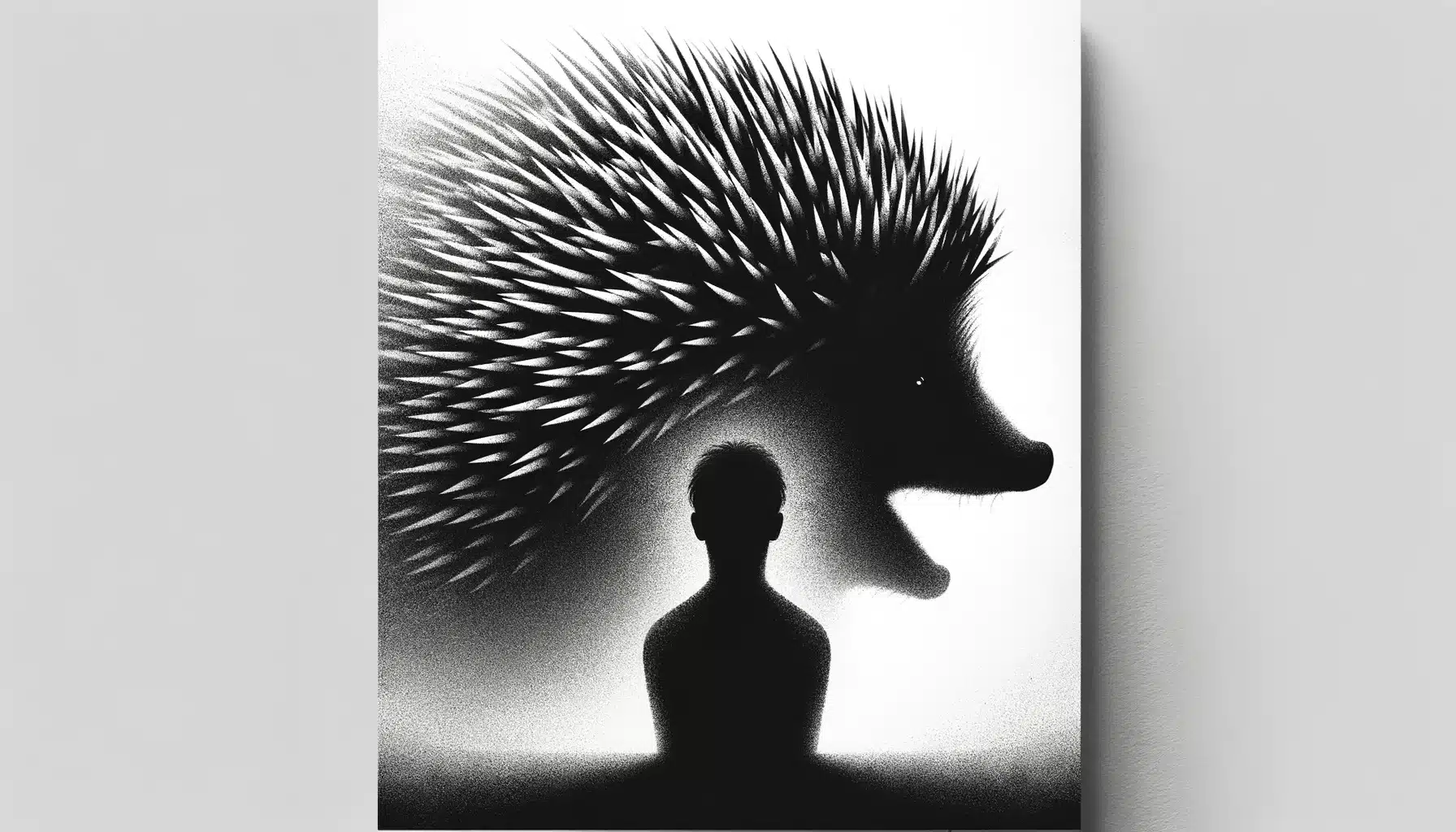
Traditional psychotherapy often emphasises the importance of creating psychological distance from our problems. When we’re too close to our own struggles, we lose perspective and become trapped in circular thinking patterns that reinforce our difficulties.
This is where animal therapy-avatars offer a unique solution—choosing an animal to represent aspects of yourself and create what therapists call a ‘therapeutic third space’, a safe psychological territory where transformation becomes possible.
So that’s what we’re talking about here: choosing an animal companion to accompany you through the jungle of self-help and heal your deepest emotional wounds.
In The Making of Brio McPride, I put my heart, soul, and a lot of time into illustrating this concept through the protagonist’s very difficult journey of self-discovery. Like Brio, who must navigate multiple identities and perspectives to understand their true self, we can choose an animal avatar that allows us to explore different facets of our personality from a safe, playful distance.
The novel’s central theme—that identity can be either fluid and multifaceted or wilfully set in stone—is one that’s ideally suited to working with a therapy model that in itself is all about the nature of identity.
It should be acknowledged, of course, that in The Making of Brio McPride, the character’s therapy avatar picks him as much as he chooses his ‘running mate’ for the journey. But that’s the whole point—as you’ll see when you read the book!
At the root of all this is the seemingly obvious fact that, in the realm of self-help therapy and personal growth, often the most profound insights come when we ‘step outside’ ourselves—and with any kind of avatar we can do that quite literally.
In my blog on Narrative Therapy (NT), I outlined the types of real-world psychotherapy that went into the fictional therapy model I invented for The Making of Brio McPride. I called the fictional form of therapy ‘CHANT’, which stands for Clinical Hypnosis-Assisted Narrative Therapy, and the ‘feed’ models for this were Narrative Therapy and hypnotherapy, both of which I researched, and both of which I’m familiar with as a patient/client.

Something else I mentioned in the NT blog was ‘avatar therapy’, a new kind of talking intervention designed to help people who suffer from psychosis and hear distressing voices in their heads—’auditory hallucinations’ as they’re known. I didn’t know about avatar therapy’ when I wrote the book because, although it was invented in 2008 by a professor at UCL (University College London), it didn’t really come on the public radar until a good-sized study of its effectiveness was carried out in 2024.
Avatar therapy looks to me like a really interesting new kind of therapy that must surely have potential to be developed into kindred formats that can be used to treat other kinds of mental health challenge. The basic idea is that the therapist works with the patient to create an audio ‘personification’ of the voice the patient hears, and then the therapist, the patient and ‘the voice’ sit in a room together and engage in dialogue.
The therapist guides the dialogue and controls ‘the voice’, generally using voice-morphing software, and over a course of six or twelve weekly sessions the aim is for ‘the voice’ to move from hostile to friendly, or at the very least neutral. When it works out successfully, the patient at last ends up in control of ‘the voice’ and overcomes he debilitating helplessness that accompanies hallucinatory events.
The Broadening Scope for Avatar Therapy
And we’re now beginning to see adaptions of voice avatar therapy in areas (that are formally regarded as separate from) psychotic auditory hallucinations. In 2022, for example, a trial was done to use a computerised avatar to embody the eating disorder voice in anorexia nervosa. We can expect to see many others happening of the coming years.
The Elephant: For those dealing with memory, grief, or family dynamics, the elephant offers profound wisdom. These gentle giants never forget, yet they also know how to move forward with grace. The elephant avatar excels at processing past experiences while maintaining present-moment awareness.
Anyone who reads The Making of Brio McPride might be forgiven that I knew about avatar therapy when I wrote the book, but obviously I didn’t—though I really wish I had known about it, because then I wouldn’t have fretted that the book’s concept was a bit far-fetched.
The difference in Brio is that the psychosis (for want of a better word here) isn’t auditory, and the avatar isn’t a voice but an animal who goes off into an ‘inner story’ that leads Brio resolution of his challenges—in a way that thankfully no one who reads the book seems to see coming.
And the novel isn’t about the therapy or the therapy avatar, it’s about other issues that can be explored through that medium. The similarity is that in both cases, the avatar embodies the person’s deepest existential and specific fears, anxieties and challenges.
Stepping Outside for Some Fresh Air
At the root of all this is the seemingly obvious fact that, in the realm of self-help therapy and personal growth, often the most profound insights come when we ‘step outside’ ourselves—and with any kind of avatar we can do that quite literally.
And actually, that’s really what we do when we watch a TV or movie, or read a book that really hits the spot: identify with a character (or characters) who lead us to ways of handling things, life lessons, and deeper truths about ourselves.
The more powerful, profound, fundamental or insightful this encapsulated truth is, the more likely it is that it’s contained in a book that in some way captures the essence of the human condition and will become a ‘forever story’ that stands all the tests of time.
The stories in scriptures are arguably the most fundamental of all, which is a large part of why they became scriptures in the first place. Because we deem those who wrote them to have been channelling the voice of God, and since, by definition we can never know the nature of God, it’s only by those stories that stand the test of time that we can see the face of God in our visible world and universe.
The stories in scriptures are arguably the most fundamental of all, which is a large part of why they became scriptures in the first place.
This is all pretty heavy stuff, and I can’t pretend that The Making of Brio McPride is a carefree and airy read either (how can it be when its aim is to get inside the feel of what so-called psychosis is like?), so here’s lighter-hearted journey into the world of animal therapy-avatars—and what better avatar companion could you have on your travels than your ideal animal alter ego?!
Some people might say that avatar therapy with animal avatars is also, in effect, a branch of AAT (Animal-Assisted Therapy), with animals playing a very similar role in bringing a fresh perspective, addressing overthinking, and offering the comfort of companionship—among other things. Well, who am I to disagree?!
So welcome, welcome! … to an interactive exploration in which you surely can’t fail to take a different perspective on life and unlock new pathways to understanding yourself, making awesomely good decisions, and reclaiming the sense of agency that so many people and forces have sneakily or aggressively been stealing from you.
***************************************************************************
CAUTION: This blog is a well-meaning take on one of the ways in which we can improve self-help by distancing ourselves from our own issues and trying to get an objective perspective. It is not intended to set out a ready-to-go psychotherapy model that can be implemented without supervision. If you think Narrative Therapy, Hypnotherapy, Avatar Therapy or Animal-Assisted Therapy may be able to help you, please get in contact with one of the many reputable clinics that specialise in these forms of intervention.
***************************************************************************
TAKE A WALK ON THE WILD SIDE!
CHOOSING YOUR ANIMAL THERAPY AVATAR
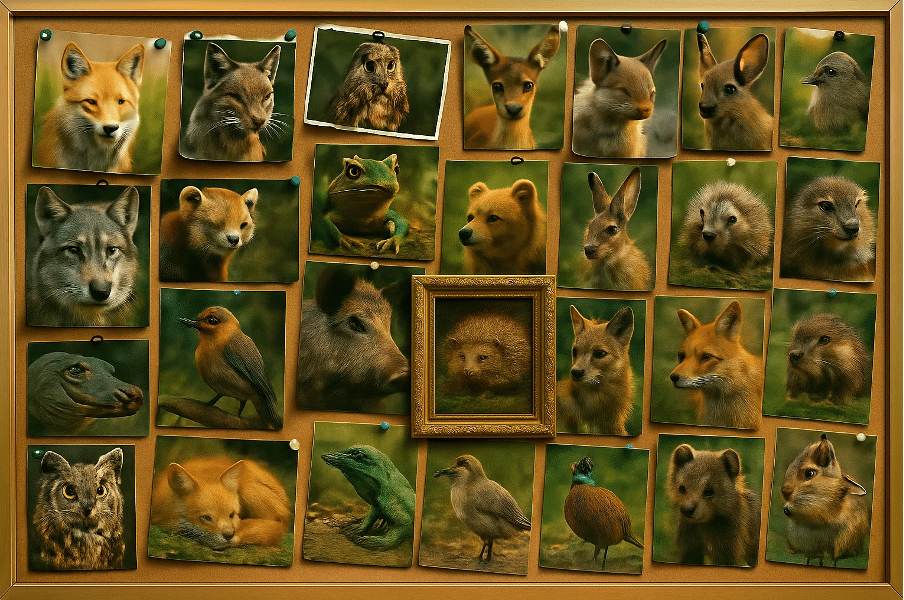
So to begin your journey with animal avatar selection, take a look at each option below and choose the one that resonates most strongly with your current needs:
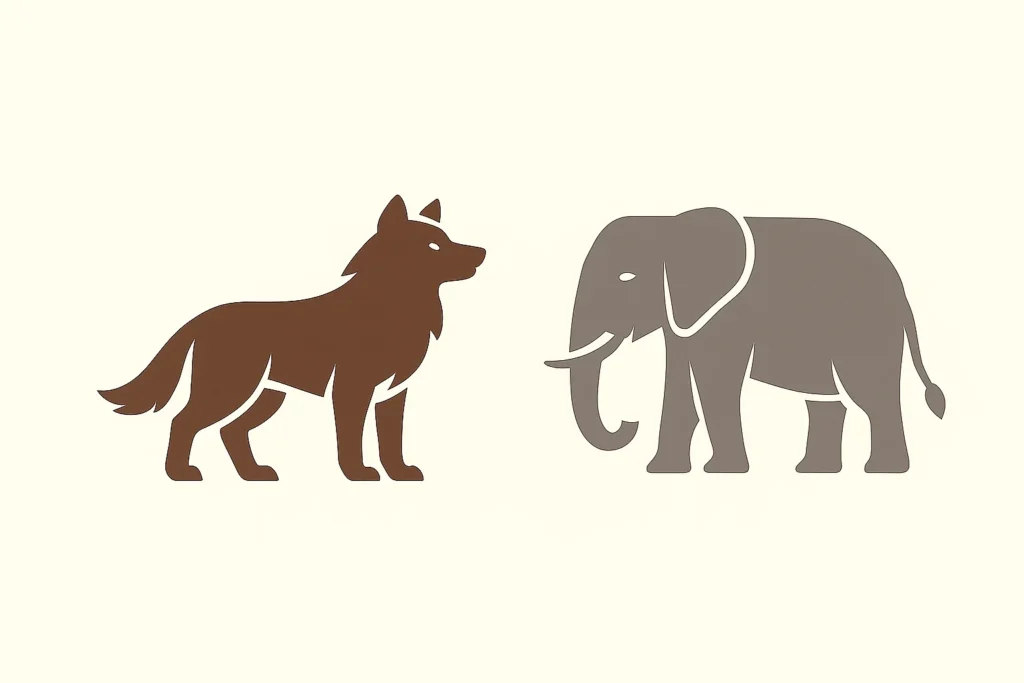
The Wolf: If you struggle with balancing independence and connection, the wolf avatar might be your guide. Wolves are both fierce individuals and devoted pack members. Choose the wolf if you’re working on boundaries, loyalty, or finding your place within communities.
The Elephant: For those dealing with memory, grief, or family dynamics, the elephant offers profound wisdom. These gentle giants never forget, yet they also know how to move forward with grace. The elephant avatar excels at processing past experiences while maintaining present-moment awareness.
The Octopus: If adaptability and creative problem-solving are your focus, consider the octopus. With its remarkable intelligence and shape-shifting abilities, this avatar helps those who feel stuck or need to approach problems from multiple angles.
The Eagle: For individuals seeking perspective and vision, the eagle soars above immediate concerns to see the bigger picture. This avatar suits those working on long-term planning, spiritual growth, or breaking free from limiting beliefs.
The Dolphin: If joy, playfulness, and communication are areas of growth, the dolphin brings lightness to heavy situations. This avatar helps reconnect with your inner child and improve relationships through better emotional expression.
Perhaps from this modest catalogue you might be able to figure out whether some other animal might suit you better, and if so, which one. The trick, of course, is in knowing what issues you need to address, and this is where you may need the help of a good counsellor—though, depending on the seriousness of your situation, it may be quite achievable (and fun) to do this on your own.
So take a moment now. Close your eyes and imagine yourself as your chosen animal. How does it feel to inhabit this form? What new sensations or perspectives arise?
YOUR INTERACTIVE JUNGLE JOURNEY
Now that you’ve selected your animal avatar, let’s engage in an interactive self-help exercise. Your chosen animal faces a challenge that mirrors common human struggles. As you make decisions for your avatar, notice what this reveals about your own patterns and preferences.

Illustrative Scenario: The Crossroads
Your animal avatar stands at a crossroads in their natural habitat. To the left lies familiar territory—safe but limiting. To the right stretches unknown terrain—risky but full of potential. Straight ahead, a narrow path winds between the two extremes.
If you’re the WOLF: Your pack has always hunted in the western valleys, but prey is becoming scarce. Do you: Lead them east into rival territory? Venture alone to scout new grounds? Or try to adapt your hunting strategies to the depleted area?
If you’re the ELEPHANT: Your herd’s ancestral watering hole is drying up. Do you: Trust your memory of a distant oasis your grandmother once mentioned? Stay and dig deeper wells? Or split the herd to explore multiple options?
If you’re the OCTOPUS: Your coral reef home is becoming too crowded with predators. Do you: Master new camouflage techniques? Relocate to the mysterious deep waters? Or attempt to outsmart the predators with your intelligence?
If you’re the EAGLE: Your mountain nesting site faces encroaching human development. Do you: Fight to defend your territory? Soar higher to find untouched peaks? Or adapt to coexist with the changes?
If you’re the DOLPHIN: Your pod’s traditional migration route now crosses busy shipping lanes and drag-net fishing grounds. Do you: Find alternative routes through unknown waters? Time your crossings differently? Or use your echolocation to navigate the dangers?
Whatever choice you made, there’s no wrong answer. Each option reflects different coping strategies and values. The aggressive approach shows courage and determination. The adaptive choice demonstrates flexibility and creativity. The exploratory path reveals openness to growth and change.
Integrating Animal Wisdom into Daily Self-Help Practice
This is obviously just an illustrative introduction to the concept that I find myself using pretty much every day—asking myself how a chimp would handle this tyre-change I have to do, how a dolphin would calm down my new bad-tempered neighbour, or how the parrot that sometimes visits my garden would work the room at yet another tedious Christmas party.
Which is to say that you’re not limited to one animal avatar—different situations might call for different animal energies. You can even take a companion. Just don’t become dependent on them, because this is all about you figuring things out for yourself.
Keep a journal from your animal avatar’s perspective. Write entries as if you were your chosen animal reflecting on human problems. This distance often reveals surprising insights.
Or maybe consider creating a personal ‘council’ of animal avatars that are always there, trucking along behind you, or making up the invisible entourage that sweeps with you into every daunting and difficult situation, each representing different strengths you can call upon.
Apart from anything else, this practice of perspective-shifting through animal avatars enhances ‘cognitive flexibility’—the ability to adapt our thinking to new situations. It’s a core component of resilience and sound mental health.
And it’s all a lot like it was with Brio learned as he struggled to integrate the multiple aspects of identity: working with animal therapy avatars teaches us that we contain multitudes.
Making Your Animal Avatar Practice Sustainable
To maximise the benefits of your animal therapy avatar practice, consider these daily integration strategies:
Start each morning with a brief check-in with your animal avatar. How would they approach your day’s challenges? What instinctive wisdom might they offer?
Keep a journal from your animal avatar’s perspective. Write entries as if you were your chosen animal reflecting on human problems. This distance often reveals surprising insights.
When stuck in decision-making, physically embody your animal avatar. Move like them, breathe like them, see through their eyes. This somatic approach bypasses analytical paralysis.
Create or find an image of your animal avatar to keep visible. This visual reminder helps you access that energy when needed.
Your Ongoing Journey with Animal Therapy Avatars
The practice of using animal avatars for self-help therapy offers a unique blend of playfulness and profundity. Like the transformative journey in The Making of Brio McPride, working with animal avatars reminds us that identity is not fixed—we have the power to shift perspectives, try on different strengths, and approach our challenges from new angles.
Whether you’re dealing with anxiety, depression, relationship issues, or simply seeking personal growth, animal therapy avatars provide a safe, creative, and effective tool for change. They offer the distance necessary for perspective, the embodiment necessary for integration, and the playfulness necessary for sustainable healing.
Your animal avatar awaits. Trust their instincts. Follow their wisdom. Let them guide you toward the wholeness that has always existed within you, waiting to be discovered through fresh eyes—be they the keen eyes of an eagle, the wise eyes of an elephant, or the playful eyes of a dolphin.
Remember: in the realm of animal therapy and self-help, you’re never alone. Your animal avatar walks beside you, offering their unique gifts whenever you need them. The question isn’t whether you have the resources to heal and grow—it’s simply which animal will help you access them today.
***
Learn more about The Making of Brio McPride here, and to purchase, here.
30% of royalties go to support UK and US mental health charities.
Please connect with me on X, Facebook, and Instagram.