




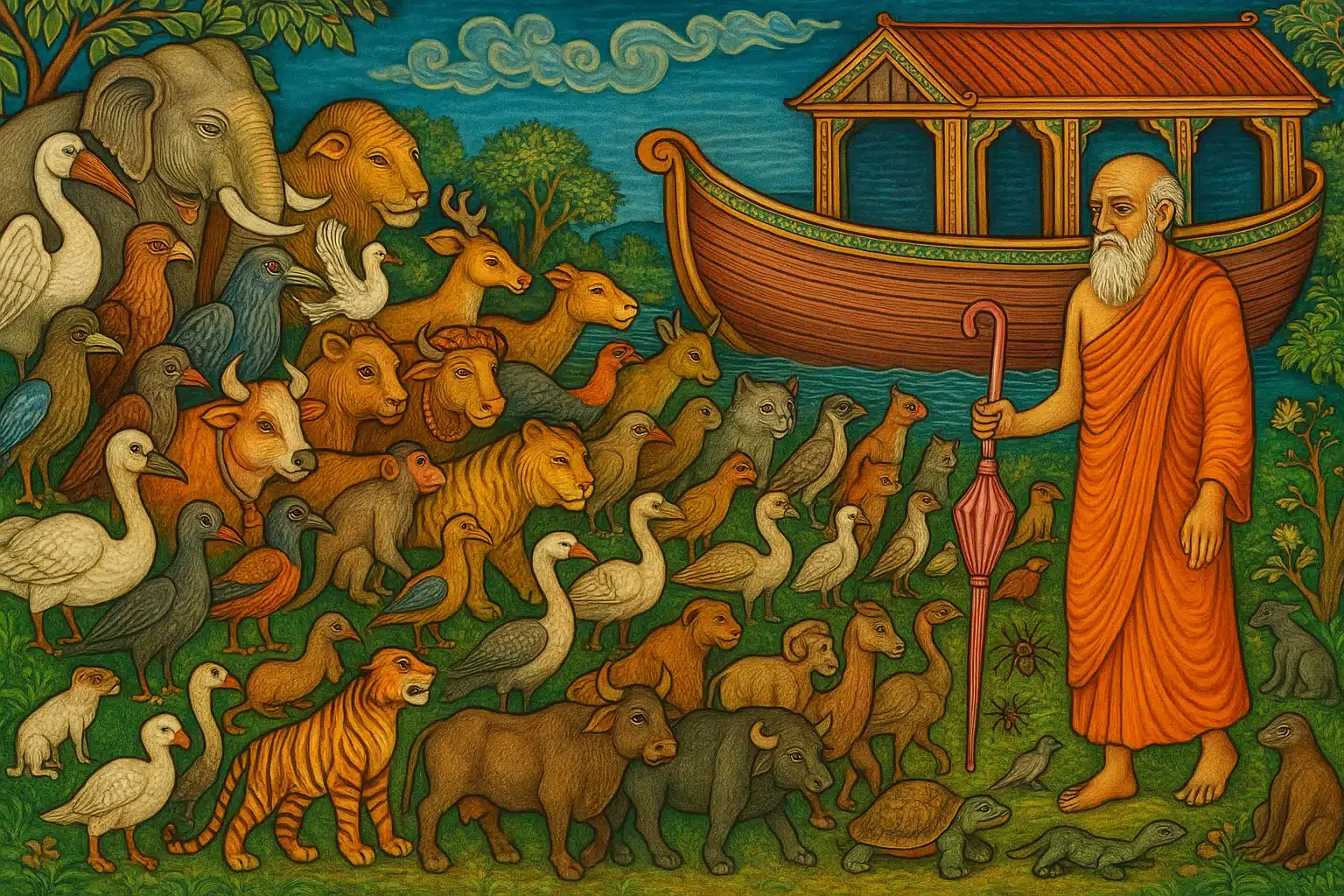
An Ancient and Global Tradition
Throughout human history, animals have occupied a profound place in our spiritual imagination. From the cattle revered in Hindu temples to the eagles soaring through Indigenous American ceremonies, sacred animals serve as bridges between the earthly and divine, the seen and unseen.
These relationships reveal something fundamental about how different cultures understand the sacred—the unknowable, prime cause of existence, the great force to which we direct our pleas, and occasionally, falteringly, our gratitude too.
These relationships with animals that are deemed sacred offer insights into the diverse ways humans seek meaning and connection with forces greater than themselves.
The reverence for animals in spiritual traditions goes far beyond simple symbolism and the need for totems. These creatures embody teachings about respect, interconnection, and the nature of divinity itself.
By exploring how different cultures honour animals as sacred, we discover not just fascinating traditions, but profound lessons about humility, stewardship, and the many paths toward spiritual understanding.
Their remarkable memory becomes a metaphor for mindfulness, while their social bonds reflect the importance of sangha, or spiritual community.
Our Many Divine Ambassadors
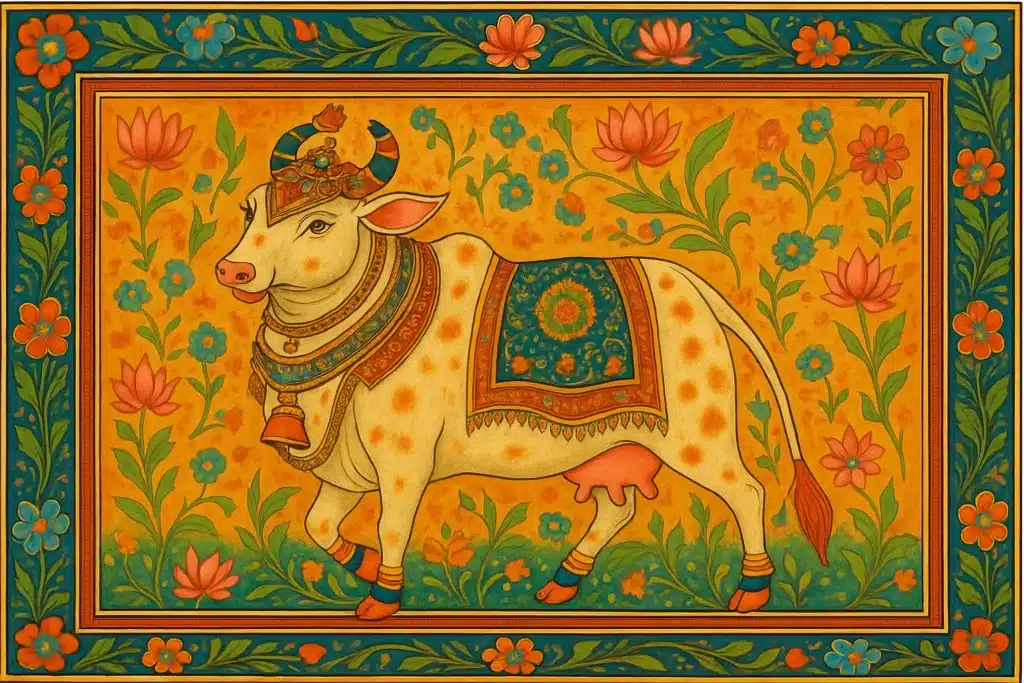
In Hinduism—the religion of all religions—no animal is more iconic than the cow, which is considered sacred and deserving of complete protection and respect. The cow is known as Kamadhenu, meaning the giver of all wishes or desires, and the reverence stems from both the cow’s association with various deities (particularly Krishna, who spent his youth as a cowherd), and a practical gratitude for the cow’s life-sustaining gifts of milk, labour, and fertiliser.
But the deeper teaching extends beyond utility. The protection of cows represents ahimsa—non-violence—a core principle that recognises the divine spark in all living beings. The gentle nature of cattle becomes a reminder of the power of peaceful existence and the importance of protecting the vulnerable.
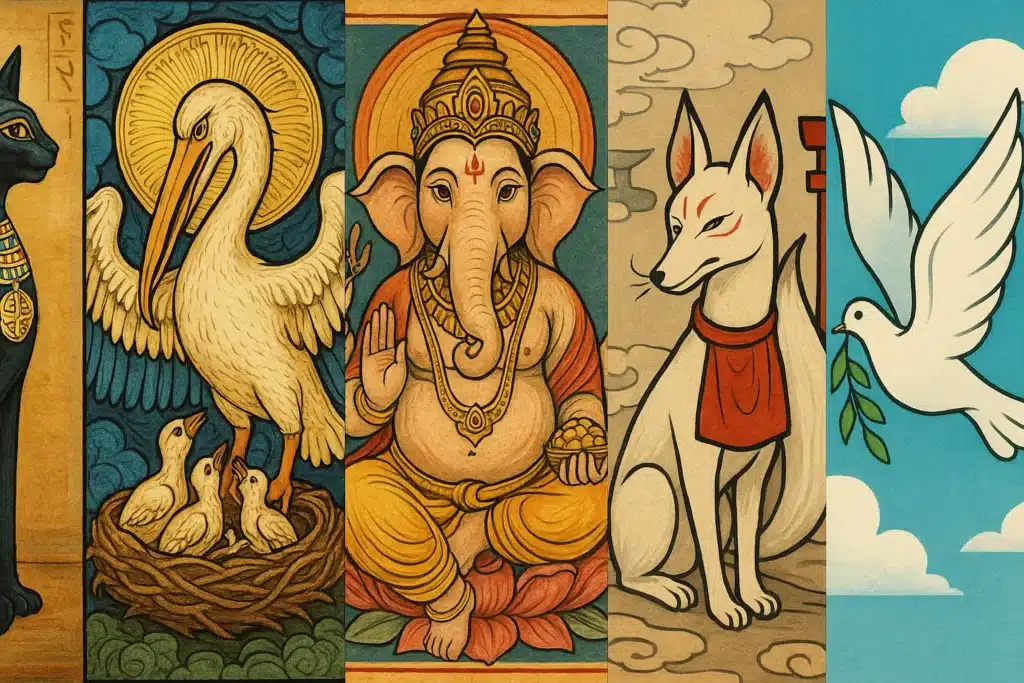
Similarly powerful is the elephant-headed deity Ganesha, the remover of obstacles, whose form teaches that the divine can manifest in unexpected ways. The monkey god Hanuman represents devotion and service, while the cobra around Shiva’s neck symbolises the transformation of dangerous forces into protective ones.
Each sacred animal in Hindu tradition carries layers of meaning, teaching practitioners to see the divine in diverse forms throughout creation.
Buddhist traditions, particularly in Thailand and other Southeast Asian countries, hold elephants in special reverence. The white elephant appears in the story of Buddha’s birth, when his mother dreamed of a white elephant entering her womb.
Elephants represent mental strength, earthiness, and the ability to remove obstacles on the path to enlightenment.
Their remarkable memory becomes a metaphor for mindfulness, while their social bonds reflect the importance of sangha, or spiritual community.
In ancient Egyptian spirituality, animals were not merely symbols but earthly manifestations of divine forces. The ibis and baboon represented Thoth, god of wisdom and writing.
Cats, associated with the goddess Bastet, were so revered that killing one attracted the death penalty. The scarab beetle, pushing its ball of dung, became a powerful symbol of the sun’s journey and rebirth.
These associations weren’t arbitrary but emerged from careful observation of animal behaviours that seemed to mirror cosmic principles. The Egyptians understood that by honouring these creatures, they honoured the gods themselves.
Indigenous traditions across the Americas demonstrate perhaps the most integrated understanding of sacred animals. The buffalo provided not just physical sustenance but spiritual teaching about sacrifice, abundance, and the interconnectedness of all life.
The near-extinction of the buffalo caused by European attempts at genocide was not merely an ecological and humanitarian disaster but the worst kind of spiritual wound.
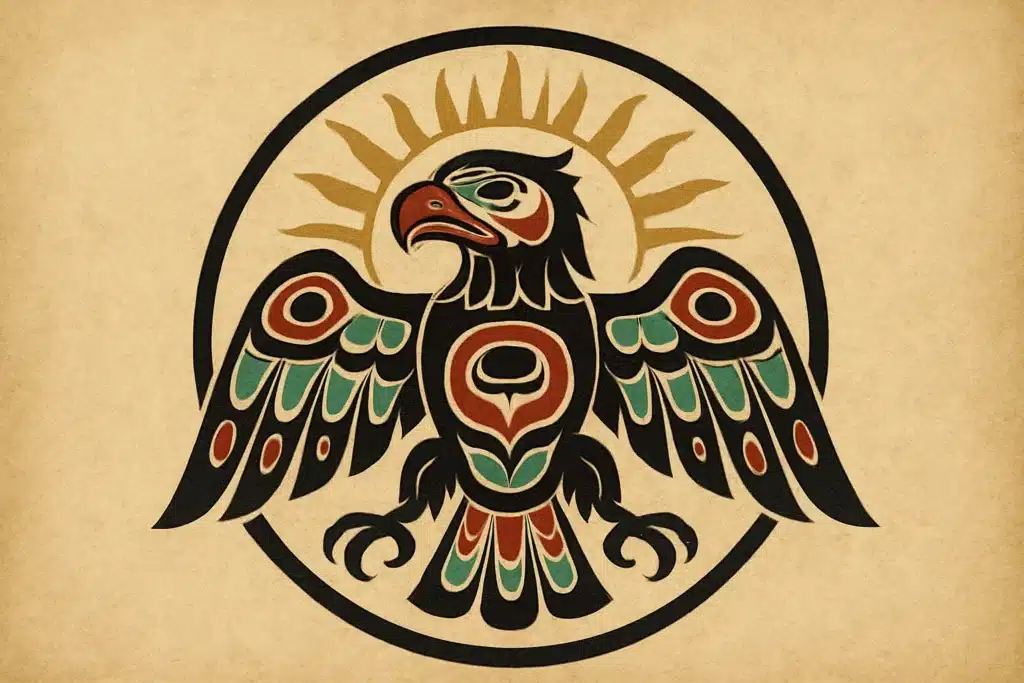
The eagle is a sacred symbol across many cultures, notably in Native American traditions, where the soaring heights of its flight and the limitless nature of its view make it a messenger between humans and the Creator.
In Native American cultures, the eagle also represents strength, bravery, and wisdom. Its feathers are sacred objects, earned through acts of courage and used in ceremonies with deep reverence.
In ancient Greece, it was the sacred companion and messenger of Zeus, while in Norse mythology, it was associated with the god Odin. The eagle’s high flight and majestic presence have inspired belief in its divine connection and role as a messenger between the earthly and spiritual realms.
In Pacific Northwest cultures, the salmon’s return each year teaches about cycles, persistence, and the gifts of nature that must be received with gratitude and responsibility. The wolf, bear, and raven appear as clan animals and spiritual guides, each offering distinct wisdom about survival, transformation, and community.
The Abrahamic traditions, while generally emphasising human distinctiveness, still recognise animals as part of divine creation deserving respect. In Judaism, the Torah’s laws about animal welfare, including requirements for rest on the Sabbath and prohibitions against causing unnecessary suffering, establish animals as beings worthy of moral consideration—though it must be acknowledged that the Hebrew Bible (that also serves as the Christian Old Testament) makes many calls for ‘burnt offerings’ of animal flesh, which unfortunately just carried on the practice that humans have been doing for tens of thousands of years.
The eagle’s high flight and majestic presence have inspired belief in its divine connection and role as a messenger between the earthly and spiritual realms.
The psychology of fearful humility in sacrifice is clear enough: offering up sacrifices would seem to appease the apparently wrathful God who can send everything from forest fire and illness to floods and death. God must also be hungry, and presumably likes a smoke.
Nonetheless, it remains somewhat unclear to me why God would want people to set fire to so many precious, defenceless, peace-loving creatures. And in so many ancient religions and spiritual practices, most burnt offerings are not even eaten, just burnt away to ashes. And generally, if there’s any meat left to eat, it goes to the priests.
I suppose, since humans are inevitably going to eat meat (and create elites who get the best bits in life), they’d better do so with a great deal of reverence, and even misguided humility is presumably better than hubris.
In happier news, the dove carrying an olive branch to Noah’s ark becomes a universal symbol of peace and divine promise, and this story is shared by Judaism, Christianity, and Islam.
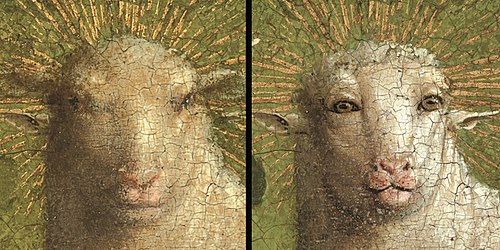
[The Christian Lamb of God: public domain, Wikipedia. The restored version (right) reveals a very human-looking Lamb of God.
Christianity inherited and evolved these Jewish symbols, with the lamb representing Christ’s sacrifice (if not Christ Himself), the dove embodying the Holy Spirit, and the fish serving as an early Christian symbol.
The pelican feeding her young with her blood is another Christian symbol, one which mirrors Christ’s atonement, where He shed His blood for the salvation of mankind. Saint Francis of Assisi’s radical love for animals—which he called brothers and sisters—reminds believers that all Creation participates in divine praise.
In Islam, animals are seen as communities unto themselves, praising Allah in their own ways. The Quran mentions various animals, from the humble and industrious ant whose society Solomon could understand, to the hoopoe bird that served as his messenger.
Cats hold special affection due to their cleanliness and the Prophet Muhammad’s fondness for them—peace be upon him.
These traditions emphasise that while humans have responsibility over animals, this comes with obligations of compassion and justice.
Chinese spiritual traditions offer the zodiac animals, each embodying characteristics that cycle through time, teaching that different qualities have their season and purpose. The Chinese dragon, unlike its flame-throwing, death-dealing Western counterpart, represents wisdom, power, and good fortune.
The crane symbolises longevity and peace, while the tiger embodies courage and protection. These animals appear in Daoist teachings about harmony with nature and in Buddhist art throughout East Asia.

In Japanese Shinto, animals can be kami (spirits) or their messengers. A kitsune is a fox spirit from Japanese folklore that possesses magical abilities, especially shapeshifting, which increases with age and wisdom. These intelligent beings can appear as human women or other life forms, serving in various roles from tricksters to loyal guardians and messengers and servers of the Shinto rice deity Inari.
The number of tails a kitsune has, up to nine, signifies its power and age. Deer are sacred in Nara (a prefecture in Japan) as messengers of the gods. This are wonderful traditions that recognises how the sacred doesn’t exist apart from nature but within it, accessible through respectful relationship with all beings.
These traditions remind us that the sacred surrounds us, if only we have eyes to see and hearts open to wonder.
Have Faith in Our Furry Friends
What can these diverse traditions teach us about belief itself? First, they demonstrate that the sacred appears in countless forms, challenging any notion that there is only one way to understand or approach the divine.
The multiplicity of sacred animals across cultures suggests that spiritual truth may be more like a multifaceted jewel than a single beam of light, revealing different colours depending on the angle of view.
Second, these traditions emphasise relationship and reciprocity. Sacred animals are not distant symbols but active participants in the spiritual life of communities. As fellow representatives of the divine, they require protection, respect, and understanding.
This relational aspect of faith shows how belief is not merely intellectual assent but lived practice in relationship with the wider world.
Third, the universal presence of sacred animals across cultures points to a shared human recognition that we are not alone in creation, that consciousness and spirit extend beyond human boundaries. This humility offers an important corrective to anthropocentric worldviews that see nature merely as resource rather than a relative.
Finally, these sacred animal traditions offer hope for environmental consciousness rooted in spiritual values. When animals are seen as sacred, their protection becomes a religious duty. When extinction means not just loss of species but loss of spiritual guides and divine manifestations, conservation takes on new urgency.
In our interconnected world, understanding how different cultures honour sacred animals enriches our appreciation for the diversity of human spiritual expression. These traditions remind us that the sacred surrounds us, if only we have eyes to see and hearts open to wonder. They teach that belief can be a force for protection and preservation, not just human salvation.
Most importantly, they show us that wisdom comes in many forms, sometimes on wings, sometimes on four legs, sometimes in the patient eyes of creatures who share our world and deserve our reverence.
***
Learn more about The Making of Brio McPride here, and to purchase, here.
30% of royalties go to support UK and US mental health charities.
Please connect with me on X, Facebook, and Instagram.